
Insights
We are moving beyond an information economy, where simple access was sufficient, into a thinking economy. Here’s what it means for fiber.
By: Gary Bolton, President and CEO, Fiber Broadband Association (FBA)
June 8, 2026 — The fiber industry and the Fiber Broadband Association (FBA) face the same question McDonald’s founder Ray Kroc did when the firm’s restaurants were taking off – What business are we in? Over the past 25 years, we have been on a mission to connect every home and business with fiber. By the end of this decade, we will accomplish this mission for over 90% of households in America.
For years, we’ve talked about fiber as homes passed, homes connected, and locations served. Those statistics still matter, but the language is no longer sufficient for the time we are in. We are moving beyond an information economy, where simple access was sufficient, into a thinking economy.
The thinking economy
A thinking economy is where value is not created by access to information, but where value is created by how you use it, turning information into intelligence and acting upon it instantly. In the thinking economy, analysis and speed are the primary virtues: How fast you understand, how well you decide, and how quickly you act.
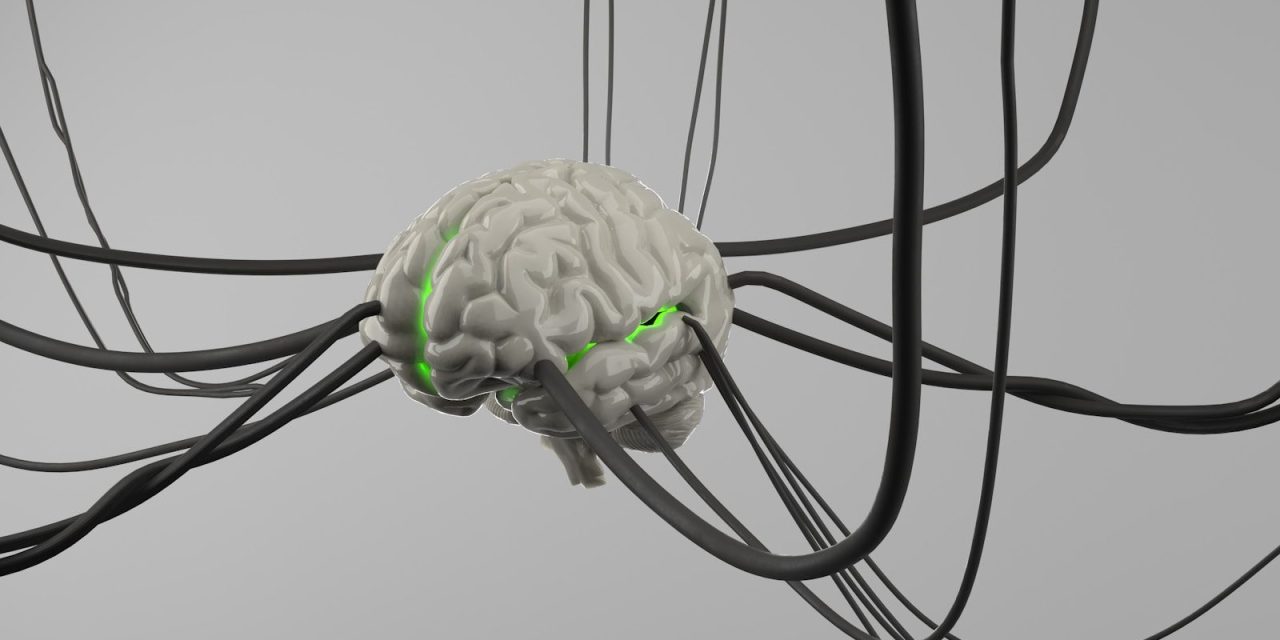
Fiber is the nervous system of the thinking economy. A nervous system does three things: it senses, transmits, and enables intelligent response. That is exactly what fiber is becoming in the age of artificial intelligence. To understand the scale of this shift, we need to look at where fiber is being deployed and how rapidly it is happening.
Connectivity everywhere
The first layer of the nervous system is connectivity everywhere, an area where fiber is connecting the nation. Over the past five years, the United States has passed 45.9 million homes with fiber, bringing us to more than 100 million homes passed. Over the next five years, we will connect another 60 million unique homes with fiber.
In 2025 alone, we passed 11.8 million homes, breaking the previous year’s record. We will beat that record again this year. FBA research estimates that the total addressable market for fiber-to-the-home (FTTH) in the U.S. will be in the range of 130 million homes, when you include multiple passings.
And everyone is deploying fiber, from tier 1 providers to regional providers, new entrants, cable operators, rural phone companies upgrading legacy copper, electric cooperatives, and municipal providers. Together they accounted for 40% of fiber deployment last year – and that number is growing.
There are now 1,561 active fiber providers in this country, including 42 new fiber provider entrants and 71 fiber providers doubling their footprint in the past six months. This is one of the largest infrastructure expansions in modern American history, with over 90% of the growth being driven by private capital.
AT&T, Verizon, Brightspeed, T-Mobile, Ziply, Google Fiber, Altafiber, C-Spire, and a growing ecosystem of private equity-backed providers are deploying fiber at scale—racing toward a future where fiber reaches nearly every home and business.
AT&T alone is targeting 60 million-plus fiber locations by 2030, effectively doubling its footprint. Why? Because fiber investment pays off. It demonstrably grows market share, increases ARPU, reduces operational costs, lowers carbon impact, increases service attachment, and, most importantly, future-proofs the network.
Connecting intelligence
The second layer of the nervous system is connecting intelligence, specifically artificial intelligence. With Microsoft, Amazon, Google, and Meta investing roughly $370 billion a year in AI infrastructure, alongside multi-billion commitments specifically for fiber and optical systems, fiber’s role is critically important.
Artificial intelligence requires low latency for real-time inference, massive bandwidth for model training, and resilient interconnection between hyperscale data centers. To support the growth of AI, we will need three times more hyperscale data center capacity, two times more fiber route, and three times more total fiber deployed.
In addition to centralized hyperscale data centers, AI is steadily moving into the edge of the network for lower latency and faster response time. The leap many people haven’t made yet is that fiber to the home and fiber connecting the data centers aren’t two separate systems, but different parts of the same one. The same fiber that connects a rural community is part of the system that connects AI data centers. The same venture capitalists that are funding FTTH expansion are now fueling AI-driven network densification.
Fiber is the integrated, whole nervous system the economy uses to think and everyone needs to recognize as we move from simple connectivity to cognition, everything changes in terms of the metrics we associate with networks. Latency becomes reaction time, capacity becomes cognitive bandwidth, network resilience becomes system health.
We are no longer optimizing networks just for speed, but we are optimizing them for intelligence for productivity. In a thinking economy, simply moving bits around is not enough. You have to enable and move intelligence instantly, reliability, and at scale.
Building the nervous system
The nervous system of the thinking economy is being built by everyone involved in the fiber ecosystem, including telecom operators expanding fiber-to-the-home, hyperscalers building AI data center campuses, infrastructure firms deploying middle-mile and long-haul fiber, and manufacturers scaling optical systems and fiber capacity. Fiber is now the common denominator bringing together separate industries on a shared foundation of connectivity and computation.
This is a moment similar to electrification, building the interstate highway system, and connecting the world through the early internet. But at the same time, it is different, because we aren’t just building infrastructure for movement, we’re building an infrastructure for thinking that will determine economic success of individuals, municipalities, regions, and the nation as a whole.
And what we build now will determine who leads – and who falls behind. We don’t want to fall behind.
The challenges ahead
Building a nervous system for a thinking economy is not easy. We face real constraints, including power availability for hyperscale data centers, supply chain bottlenecks across a range of resources, permitting speeds, and workforce shortages, with over 200,000 additional workers needed in fiber deployments alone over the next few years.
But the most important challenge is to ensure the nervous system is inclusive. A nervous system that doesn’t reach everyone limits the growth of the whole. We have to be aware of and push back against easy, short-term, cost-based solutions because they’re a quick fix that look good for a saving-money soundbite, but don’t go to provide a long-term solution that will ensure sustained growth and productivity for both today’s needs and tomorrow’s challenges. We’ve been there, done that with DSL and coax, and we’re starting to pay the price as we upgrade from these legacy technologies after years of letting them decay in place.
As we talk about the state of fiber today and the years ahead, we need to remind ourselves that we’re not just connecting people and institutions, we’re connecting intelligence into every home, business, and system. We’re not just supporting the economy; we’re enabling it to think. We are building the nervous system of a thinking world and the speed, resilience, and reach of that system will define what is possible in the decades ahead.
What the thinking economy means
Creating a thinking economy means we’re building a system that leaps ahead, not one set at incremental progress, providing benefits from everything from creating the latest AI tools to improve productivity, to new and revolutionary advances in telehealth, agriculture, manufacturing, and so much more.
Over the past 25 years, we’ve been planting the trees – fiber – across the nation’s homes and businesses. The emergence of AI and the thinking economy means we’ll be able to enjoy the benefits of the forest for decades to come.
Get this news in your inbox. Subscribe to the Broadband Communities newsletter!