
News
All eyes are shifting to the Strait of Hormuz as analysts warn of dire economic consequences resulting from war in the Persian Gulf.
By Brad Randall, Broadband Communities
The ongoing war involving Iran, the U.S., and Israel in the Middle East has sent economic shockwaves around the globe.
Now, as the conflict drags closer to entering its third week and continues to involve more nations, analysts are warning of massive supply chain impacts if the Strait of Hormuz is further engulfed by war.
It could have larger implications for the ongoing buildout of data centers in the United States.
Earlier today, the Associated Press quoted Hakan Kaya, senior portfolio manager at Neuberger Berman, as saying closure of the Strait of Hormuz could cause “the largest supply disruption in modern history.”

The report, filed by reporter Stan Choe, further warned that data centers could become more costly if wholesale prices jump with inflationary pressure.
It comes as Iran’s Revolutionary Guard has stated that oil will not be permitted through the critical maritime passage, according to the AP.
America is in the midst of a data center boom
Meanwhile, as concerns mount, the construction of data centers has been continuing at a breakneck speed in the United States, with Texas and Virginia both becoming hotspots for the facilities.
Impacts caused by global supply chain disruptions may also be felt by the global semiconductor industry, as was touched on in recent analysis posted by Richard Chuck Olivas, of TMBS Consulting in Singapore.
“Rapid expansion in artificial intelligence infrastructure, hyperscale data centers, and advanced computing platforms is accelerating global semiconductor demand,” he said. “Maintaining stable flows of energy, materials, and industrial gases is essential for sustaining the growth of the global semiconductor industry.”
Like the supply chain, technology infrastructure in the immediate region also remains vulnerable as the conflict continues.
A report from Rest of World last week detailed how Amazon, Microsoft, and Google have spent years building data centers across the Persian Gulf region.
Three AWS data centers, two in the UAE and one in Bahrain, were damaged in strikes this month, Rest of World reports.
In addition to threats from the skies, the Rest of World report noted that many data centers in the Middle East are also reliant on subsea fiber-optic cables that run through the Strait of Hormuz and the Red Sea. Both bodies of water now come with serious security concerns, the report detailed.
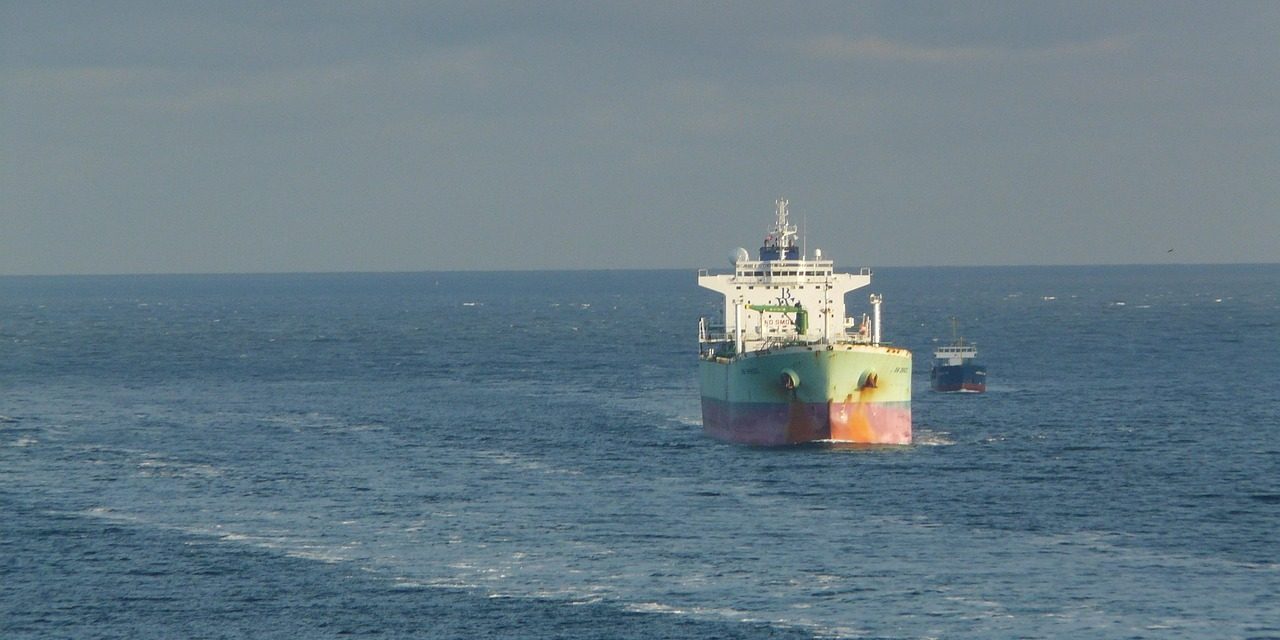
The White House said today that tankers have not yet been escorted by the US Navy through the Strait of Hormuz, through which roughly a fifth of the world’s oil passes, according to the AP.