
Bandwidth Hawk
SpaceX will have to spend hundreds of billions of dollars to buy the spectrum it needs. It is at serious risk of a setback if AI stumbles.
By: Steven S. Ross, Broadband Communities
Last April, I explored SpaceX financials and argued that the company was, at least in the short term and as far as Wall Street was concerned, overhyped. My prediction has held up so far. The stock went public priced at $202 a share, briefly got as high as $226, and fell to a low of $102 in early August after it released its first quarterly report as a public company. It has been priced around $150 most of September.
The weak price is at least partly due to SpaceX spending far faster on CapEx (especially in its xAI) than it is gaining in revenue. That does not mean, however, that low-earth-orbit (LEO) satellites will be relegated to a nice niche in the broadband business or in the SpaceX portfolio. Its LEO subscriber base increased about 15 percent to 12 million over that time. The IPO raised about $86 billion as well. It is clear that SpaceX and at least one other operator/enabler – China – have already started to position themselves to dominate the worldwide communications market in the decades ahead.
It does mean that existing broadband providers – especially the smaller ones that service most of rural America – will need more capital to compete but will likely find capital harder to get from banks and investors in the years ahead. Deployers and bankers are already calling me about it, even as interest rates rise and money gets tighter in response to costs of war and a mismanaged economy.
Indeed, in its first public quarter, SpaceX reported $4.3 billion for its “connectivity” segment (LEO and government contracts) — up 32 percent over the previous quarter and up 66 percent year-over-year. SpaceX says its Starlink customer base of 12 million generates an average monthly revenue of $66 each, which would be $2.4 billion for the quarter. So “government” connectivity revenue would be about $2 billion.
SpaceX will have to spend hundreds of billions of dollars to buy the spectrum it needs and has already started to do so. It is at serious risk of a setback if AI stumbles. But in the long run, SpaceX and its LEO competitors have great potential to stymy investment by major carriers and to soak up capital needed by smaller, regional carriers in the United States and other wealthy nations.
This is due to a variety of factors:
- Diversification (in revenue streams and in geographical areas served) far beyond what even communications giants like AT&T can achieve; it also said last summer it is operating in 164 countries
- Business plan
- SpaceX has stated its goal to deliver a majority of the world’s internet traffic
- Amazon Leo is adding to its satellites, mainly to support to support its AWS data center and global internet needs – another traffic bleed for legacy carriers; it hopes to launch as many as 50,000 orbiting data centers
- Support by the Trump administration and governments worldwide; over 2 billion people have no internet service and another 2 billion have only spotty cellular service
- Favorable technology trends, especially ever-lower costs to lift payloads into orbit, even while legacy carriers face increasing terrestrial deployment costs
- Ability to get favorable regulatory movement in the USA, in part through political connections and because SpaceX seems to be able to cut through the tangle of existing broadband programs for legacy broadband technologies. House Republicans in late July enumerated about 130 such programs
- SpaceX has called for eliminating all federal subsidies for “high cost” broadband as well (at least 15 programs spending $4.5 billion annually to build and maintain rural broadband networks)
The two-year delay in the Broadband Equity Access and Deployment program (BEAD) favored Starlink as well. Frustrated potential customers, especially in rural areas, chose Starlink instead, making their addresses non-BEAD eligible. That, in turn, helped push some deployers who won BEAD grants to decline them. The effect was especially pronounced among rural electric coops.
The tangle won’t likely be solved any time soon. The House Communications and Technology Subcommittee was hearing testimony on the (unusually) bipartisan PLAN for Broadband Act, calling for a simplification of these programs, while the Federal Communications Commission (FCC) already has subsidies under review for cutting as well.
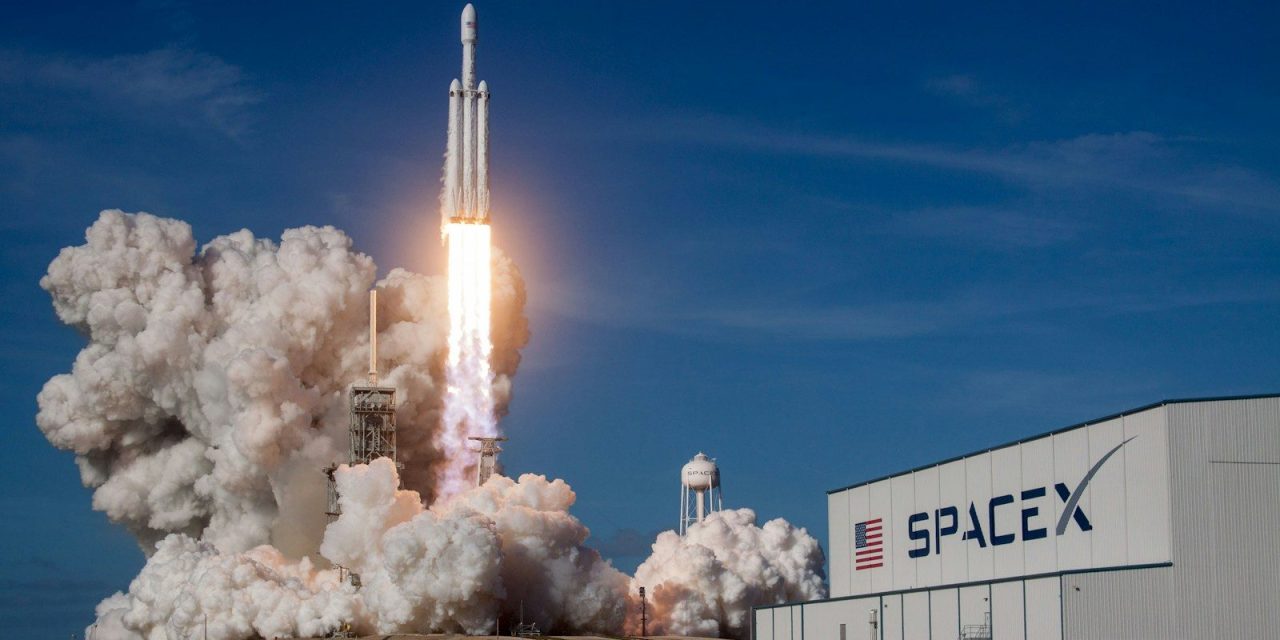
Subsidies? SpaceX has announced plans to build the world’s largest spaceport in southern Louisiana, to easily double its current 150+ annual launches. It will cover 125,000 acres of coastal land in Vermilion Parish. This is one of the few places in the US that is remote enough from neighbors, is in the south where Earth’s rotation gives an extra head start to orbital speeds and has a safe flight path over water. Yet SpaceX paid the state only $100 million for it.
Last July, China surprised almost everyone by landing a reusable rocket comparable to the SpaceX Falcon 9 for the first time. China will clearly emerge as a major LEO carrier-to-orbit for SpaceX competitors worldwide.
Meanwhile, Musk says the V3 satellite is an order of magnitude (10x) more capable than the Starlink V2. He’s told the FCC he wants to launch 100,000. There are about 10,000 V2 models in orbit. That increases his traffic-capacity 100-fold … if he can buy the spectrum to exploit it. They would be launched by its much larger Starship.
All that, in turn, adds uncertainty to issues local banks and various state funding sources have while considering loans and other aid to existing carriers.
At the same time, the FCC is working to bring its licensing approaches for communications satellites (LEO especially, but also other satellites) into better sync with the aspirations of SpaceX and its competitors. Any such move would further increase LEO competitiveness with terrestrial carriers, especially wireless and cellular.
Various financial publications, including the Wall Street Journal, have reported that SpaceX showed its own mobile handset to investors before its IPO went live. I have been unable to find a single one, however, among my list of broadband investors. It supposedly would integrate xAI technology but still use a conventional Qualcomm Snapdragon chipset, WSJ reported.
Spectrum!
The FCC is scheduled to auction C-band spectrum — useful for terrestrial networks as well as low-Earth orbit (LEO) satellite connectivity — as early as next spring. It has three other spectrum auctions planned for 2028. Clearly, the LEO providers, especially SpaceX, have an extra incentive to buy rights to it. SpaceX can simply sell stock to finance the purchase. No legacy provider can do that.
FCC also started soliciting comments on using some unlicensed spectrum (not including the 902-928 MHz band it its original proposal) for direct-to-device satellite service; SpaceX clearly expects to acquire or partner with other deployers – in cities as well as in rural areas — to use or share spectrum they already have. It is certainly capable of building its own terrestrial consumer-facing cellular networks that would use LEO for transport. The major US competitors (ATT, Verizon, and T-Mobile) have lots of debt on their balance sheets and have been raising rates, too, making them an easier target for SpaceX.
SpaceX recently bought $20 billion in spectrum licenses from EchoStar. In addition, SpaceX is well-placed to cheaply buy or rent spectrum rights in countries outside the US, especially because terrestrial deployers have provided so little landline service in those places, and only spotty cellular service. And, of course, SpaceX satellites that are heavily accessed in the US have vast amounts of spare capacity elsewhere on the globe.
Contact Steve Ross, the Bandwidth Hawk, at steve@bbcmag.com.
Subscribe to the Broadband Communities e-newsletter!
Broadband Communities Summit, co-located with Connected America, brings together the people responsible for planning, developing, building, managing, and future-proofing the nation’s digital infrastructure. It is the premier gathering for the connectivity and telecommunications sector, bringing the entire broadband supply chain together under one roof. Learn more about our 2027 event or book your tickets today.