


Multifamily
Some key lessons on literacy, risk, and responsible AI adoption for multifamily owners and their vendor partners …
By: Valerie M. Sargent, Broadband Communities
I’ve been talking a lot about AI recently, because its presence is growing exponentially in our multifamily world. At the end of January, I braved an ice storm in Dallas to join attendees at the Multifamily NEXT conference, which was focused on artificial intelligence, governance, and real-world applications for multifamily owners and operators.
While the agenda included emerging tools and hands-on learning, the most meaningful takeaways were not about speed, novelty, or automation. They were about fundamentals: how AI works, where risk lives for the industry, and why leadership-level understanding is now a requirement rather than a nice-to-have.
As artificial intelligence becomes embedded across leasing, operations, marketing, and resident engagement, the industry is reaching a point where casual or fragmented adoption is no longer sustainable. The conference made clear that AI use in multifamily must be intentional, governed, and grounded in foundational knowledge.
AI literacy must come before AI adoption
One of the clearest themes throughout the conference was that many multifamily professionals are already using AI without fully understanding it. Familiarity with a single tool or interface does not equate to literacy. Artificial intelligence is not one thing. It is an ecosystem of models, systems, and use cases that behave differently depending on how they are trained, deployed, and governed.

Foundational literacy matters most, because AI outputs are only as reliable as the inputs, constraints, and environments in which they operate. Without understanding those fundamentals, organizations risk misusing tools, over-trusting outputs, or failing to recognize limitations. This is not only true for property management companies, but for those vendors and service providers who work with their organizations providing AI-based services and tools.
I was happy to join some industry friends there and was excited to learn from multifamily icon and Multifamily NEXT founder, Tami Siewruk. She emphasized, “If you don’t have the basic fundamentals of how something operates, you can’t use it properly.”
That principle framed the entire learning experience and reinforced why education must precede scale.
AI is an ecosystem, not a shortcut
An important takeaway was the need to move beyond a one-size-fits-all view of AI. So many of us live in the world of ChatGPT, but I was able to familiarize myself with other platforms along with the best use case scenarios for each.
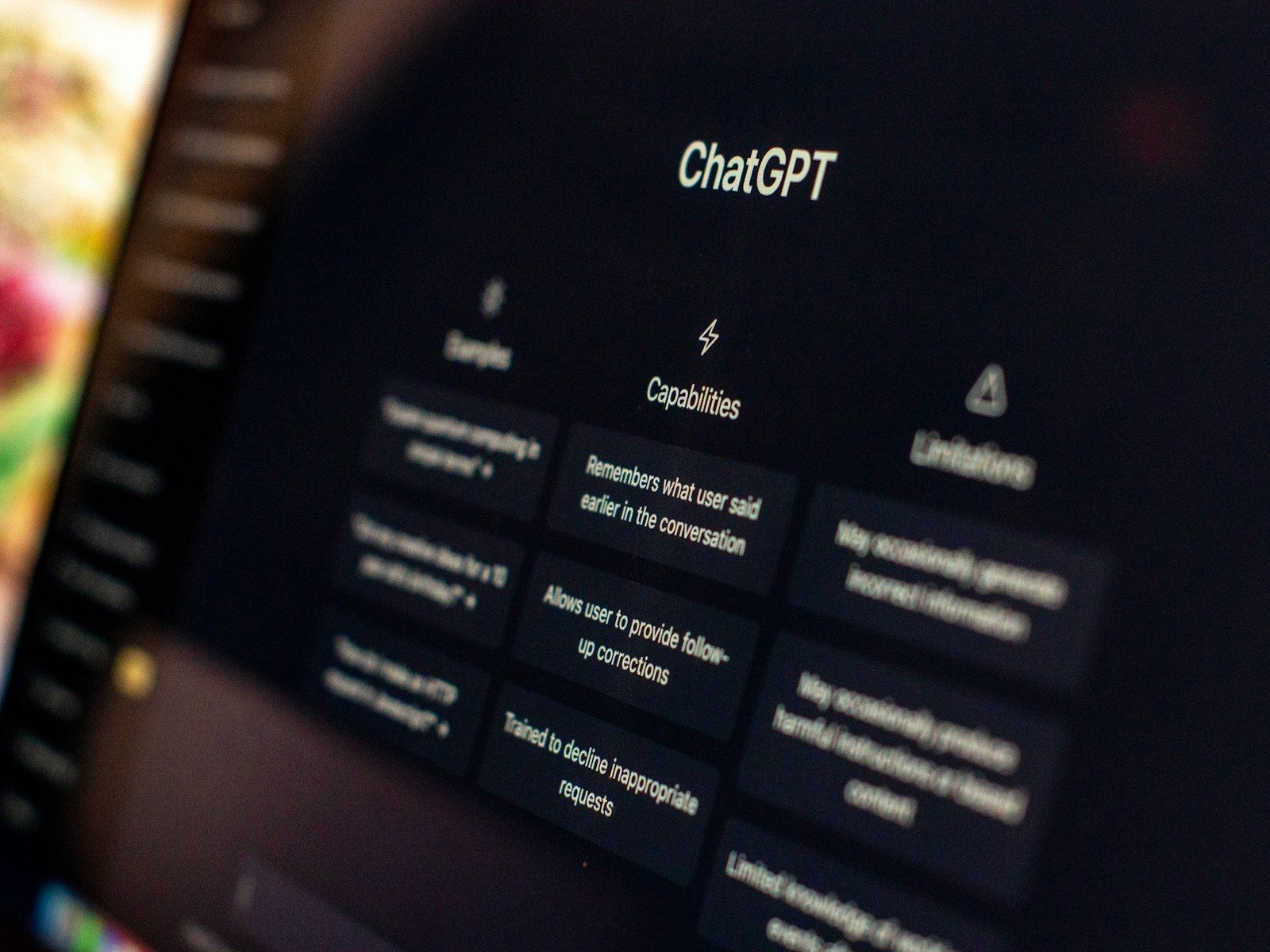
ChatGPT is only one of many AI platforms available for public use.
I realized how different tools should be designed for different functions, including analysis, planning, automation, communication, and decision support. Relying on one platform or treating AI as interchangeable across all use cases limits effectiveness and increases risk. There’s more to life than just ChatGPT!
The conference content in the Workshops, Talks, and Challenges allowed hands-on use of 166 different tools and consistently reinforced that responsible AI adoption requires matching the right tool to the right task. We must also understand what a system can and cannot do and resist the temptation to deploy technology simply because it is available.
The founder and president of Catchpoint Collective, Jamie Gorski, described this moment as a turning point for the industry, noting, “We’re at an inflection point where AI tools are being adopted, but not always used well.”
The implication was clear: adoption without understanding creates exposure, not advantage.
Security and governance are core business issues
Data security and governance emerged as central themes, particularly in discussions around SOC 2 compliance. SOC 2 was positioned not as a technical detail but as a business and leadership responsibility for companies employing the use of AI in the industry. It represents an ongoing, third-party audited framework governing how data is protected, accessed, and managed across systems.
This matters in multifamily because resident data and operational information flow across multiple vendors and platforms. Not all AI tools are built with enterprise-grade security, even when privacy settings appear robust.

The importance of governance is reinforced by the broader regulatory environment. HUD’s 2024 “Guidance on Application of the Fair Housing Act to the Screening of Applicants for Rental Housing,” and the companion “Guidance on Application of the Fair Housing Act to the Advertising of Housing, Credit, and Other Real Estate-Related Transactions through Digital Platforms” clarified that owners and operators remain responsible for outcomes when AI is used in housing-related processes, even when third-party vendors are the ones utilizing it on their behalf.
While regulation was not the entire focus of the conference, it provided important context for why governance, documentation, and vendor vetting must be embedded into AI strategy from the start. I left thinking that any broadband provider and vendor partner who incorporates AI uses in their business needs to be looking into SOC 2 compliance, and more multifamily owners will begin to request this important protection.
The liability conversation is often missing from everyday vendor discussions. At one point, an attendee summed it up simply, saying management companies are “liable for what the partners do.” That’s the kind of sentence that makes everyone sit up straighter, because it turns abstract tech talk into real operational responsibility. Take note.
Risk is now operational, not hypothetical
A recurring realization among attendees was that AI-related risk is no longer abstract. As AI becomes part of daily workflows, accountability ultimately rests with housing providers and their technology partners to provide understanding at all levels. Anyone working with leaders within the industry should understand the foundations of AI.
Terri Norvell, founder of the Inner Prize and co-founder of Leadership Growth Formula, reflected on this shift candidly, stating, “I underestimated how much I needed to know to help my clients and organizations be effective.”
Her takeaway echoed a broader sentiment across the room … AI is not going away, and avoiding foundational understanding only increases long-term risk.
This recognition reframed AI governance not as a barrier to innovation, but as a prerequisite for sustainable use.
Hands-on learning reinforces accountability
What was extremely helpful and distinguished this conference was its emphasis on applied learning. Participants were not only introduced to concepts but were also required to build, test, and evaluate AI tools in real time. This approach allowed for true learning and exposed both the power and the limitations of AI, reinforcing why guardrails matter.
Founder and principal of TEKFMMES, Tamela Coval, highlighted the importance of this structure, noting that hands-on work allowed participants to “see the foundation of what AI was all about, instead of it feeling abstract or disconnected from real operation.” That clarity helped bridge the gap between theory and practice.
Leadership sets the standard
AI literacy cannot live solely within IT or innovation teams. Executives and senior leaders must understand enough to set standards, evaluate partners, and ensure alignment across their organizations.
Without a shared foundation, AI adoption becomes inconsistent and difficult to govern. With it, organizations can move forward confidently, balancing innovation with accountability.
Building durable knowledge
I left the conference with a much clearer understanding of what responsible AI use in multifamily actually requires. The focus was not on chasing the next tool, but on building durable knowledge, strong governance, and informed leadership. I was able to enhance what I already knew and grow stronger in my use skillset.
AI is quickly becoming infrastructure, much like broadband did years ago. The organizations best positioned for this shift are not those moving the fastest, but rather those who get the fundamentals down first. Siewruk will be bringing Multifamily NEXT to nine cities across the United States in 2026 to bring executive-level AI competency with a goal of helping multifamily leaders understand, evaluate, approve, and scale AI initiatives with confidence.
Valerie M. Sargent is a multifamily speaker, trainer and executive consultant, and is the multifamily news correspondent for Broadband Communities.