
Contributed Article
Many tribal leaders remain undaunted by the hurdles they face and are committed to providing broadband to indigenous nations.
By: Nadir Noon, Fiber Broadband Association
The Fiber Broadband Association (FBA) wrapped up its 2024 Regional Fiber Connect series of events in Albuquerque, New Mexico, in November with the focus on the challenges and successes in building fiber broadband networks on indigenous nations, as well as bringing together New Mexico service providers.
Attendees and speakers alike emphasized the challenges tribal leaders have and continue to face in providing reliable high-speed, low-latency broadband to organizations and households in their communities, including permitting, the high cost of deploying fiber in low-population density areas, and a lack of an existing local workforce to build and support such networks.
Tribal leaders and elected officials emphasized they are undaunted by the tasks they face and are committed to providing broadband to indigenous nations for the many benefits it provides.
“Broadband deployment is critical and crucial for modern connectivity and economic growth,” said Sen. Ben Ray Lujan, in a statement presented by Field Representative Eric Chavez. “Broadband equity is key for ensuring equal access to opportunities in today’s digital age. It enables individuals to participate fully in education, employment, and health care, regardless of socioeconomic status or geographic location. It’s not just a convenience, but a fundamental right, bridging geographical barriers and creating opportunities for all.”
In the past, tribal communities have been left out of funding for projects and the decision-making process for planning and construction of infrastructure projects on their lands. It is a sore point for indigenous nations that officials within the U.S. and tribal governments continue to work on, one that is complicated by a multitude of federal agencies that can be involved with building fiber networks.
“One thing I love the most is educating internally about what it means to work in Indian country and being respectful of sovereignty and listening to the tribes,” said Margaret Gutierrez, the acting division chief for tribal broadband connectivity and nation-to-nation coordination, NTIA.
For example, most tribal governments have tribal preferences for procurement and hiring, first offering a preference to their own tribals and secondly to other tribes before they go externally.
‘There’s just a lot of hurdles that go into it’
Construction on $3 billion in NTIA-funded tribal broadband projects has been initially slow to make progress.
“The build out, I would say, has been a little bit delayed,” said Gutierrez. “Where we’re building is often very remote areas, and doing environmental (permitting) is weather driven, other agency driven. There’s just a lot of hurdles that go into it. We have a significant responsibility to not duplicate federal funds, which has been a very difficult discussion and task, both internally and externally.”
Having built up relationships between NTIA, FCC, USDA, and tribal governments, Gutierrez feels that everyone in general is now doing what’s in the best interests of the tribe and what the tribe wants to do for its situation, with construction expected to pick up in 2025 as environmental and permitting issues are cleared.
Some tribal nations already have experience in building fiber for their communities. The Chickasaw Nation’s (CN) success in building fiber started with creating Trace Fiber Networks (TFN), a wholly owned subsidiary to handle broadband. TFN first built a middle mile network that began operations in 2020 and will serve as the backbone of efforts to connect the 30 communities it serves. The network originated from an examination of the Chickasaw Nation’s expenditures of telecommunications across its territory.
“When we started looking at our overall spend in telecommunications across our thirteen and a half county footprint, over 7,600 square miles, we had over 250 locations, our communication spending was tremendous,” said Josh Snow, the president of Trace Fiber Networks. “We wanted to look for ways to reduce that spend. One of the things that came out of that study was owning our own fiber.”
The Nation had a small 15-mile fiber footprint connecting corporate offices that could serve as the cornerstone to a middle mile network that could cover the entire expanse of tribal lands. TFN built and leased a combination of 550 miles of additional fiber together to connect almost all of the more than 200 properties throughout the CN.
“One of the real benefactors that drove that drove us was our data centers,” said Snow. “We have four data centers within the Chickasaw Nation, and we had hit peak growth with our current provider. At the time, this was in 2019, we were looking to upgrade from 10 Gig connections to 100 Gig and they looked at us like we were crazy. It took (them) several months to come back and give us (a) quote. It was astronomical. I’m embarrassed to even say what that number was, but it was almost double of what we projected that we could build that network for. That was the catalyst that put us into being the middle mile provider we are today.”
‘It’s really just about control’
The exorbitant cost of third-party connectivity was not the only reason why the tribe felt it needed to own and operate its own data networks.
“It’s really just control,” said Chris Shilling, the undersecretary of technology and innovation for the Chickasaw Nation. “The word data sovereignty comes up quite a bit. When you think about it, owning your own data and owning your own stuff is the way to go. If you think about the Oklahoma tribes, during removal found their new reservations, they built their new lives, they established their own businesses, and then a lot of that was taken away through land grant activities. People might have heard of the Dawes Act. During that time, the Chickasaw Nation built its own capital, its own bank, its own housing, and the federal government took that back over.”
Those experiences and others led the Nation to make sure it can own and protect its own data as much as possible, to have “self-determination within technology,” said Shilling.
It also enabled CN to diversify its businesses and provide more opportunities to generate revenue through leasing fiber.
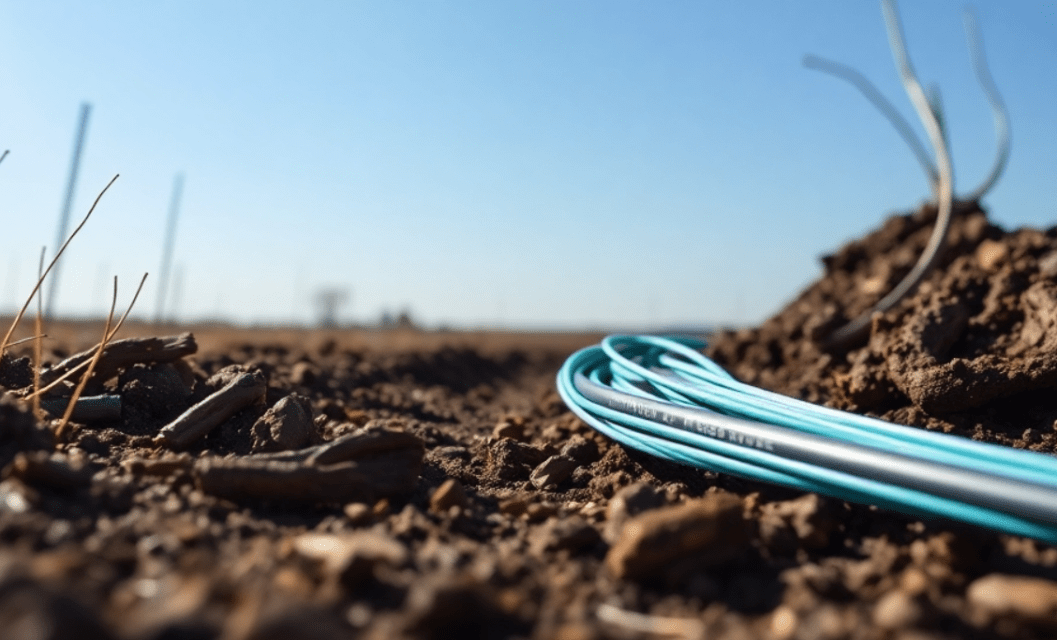
“We really wanted to future-proof our network,” said Snow. “We installed 3.25-inch ducts in the ground where we went. We put in high-capacity fiber for the time, 216 strand fiber count. We built a carrier grade networks because we knew we wanted to go after cellular backhaul and we knew we had to meet those SLAs and the challenges that those presented. We just didn’t want to build a broadband network with best effort.”
Other speakers at the conference also emphasized the need for tribes to own their own infrastructure to build economic wealth for the tribe and digital workforce skills for its members, as well as to protect their cultures.
“The other part of that too is just the fact of language and cultural preservation,” said Godfrey Enjady, the general manager for Mescalero Apache Telecom. “If we lose our language, we might could lose our status as being a tribe. How do we preserve that? Those are some of the things that we’ve been looking at and how to do that. The other part is trying to get kids to understand what the culture is, because they’re all stuck in Tiktok, they’re stuck in Facebook, all these kind of things, that’s what they do.”
The Osage Nation has tied its construction of broadband connectivity as a necessity akin to the earlier waves of transportation leading to economic vitality.
“One thing that COVID pandemic taught us was the need for connectivity, because it impacts our ability to connect,” said Dr. Jim Trumbly, the tribal business development manager for Tribal Ready. “One of the things that Chief Standing Bear for the Osage Nation said a bunch of times is that if you look at the history of economic development in the United States, they always followed the transportation paths, so they built cities near water ways, and they built cities on rivers, then they built cities on railroads, then they built cities on interstate highways.
“The broadband network is the next level of connectivity, of transportation, if you will, so they’ll fill those communities. By having the connectivity within the Osage Nation or within Indian country in general, you enable people to move back, embrace their culture, embrace their language and at the same time, work and be productive in the modern society, in the modern world.”
Click here to learn more about Broadband Communities Summit 2025 in Houston.