
Viewpoints
Contractors and service providers alike can do many things to speed up the pace of fiber network construction.
By: Gary Bolton, President and CEO, Fiber Broadband Association
Time is money. It’s a classic cliché, but certainly applicable to building fiber networks.
More time spent on construction means more time spent on labor, the largest single line item for fiber projects. More time in delays means increasing costs on labor and materials. And finally, more delays in getting customers connected means more delays in generating customer revenue to start paying off loans and generating return on investment with a new network.
Contractors and service providers alike can do many things to accelerate the pace of fiber construction, shortening the time it takes to plan, build, and turn up customers. Stakeholders need to consider and examine the Ps of Fiber for improvements: paper, permitting, pre-construction, and processes.
Incremental changes in these categories can add up to significant reductions in time spent on building, leading to increased time collecting revenue.
Paper
You can design, build, and operate your network through a single “pane of glass” with a level of accuracy and efficiency that saves time and money, increases uptime, and enables more efficient maintenance and repairs.
We’re a quarter century into the 21st Century, yet many service providers still use manual legacy processes that generate reams of paper that fill folders and filing cabinets for everything from Day 0 high-level designs of a new fiber build to the work orders generated to install new customers on the new network.

Ignoring the expense in trees and printer toner it takes to generate all the paper, manual processes result in slowing down the preparation of build plans, submission of permits, and financial paperwork for commercial loans and government grants. It also slows down the process of building and documenting the network, just to name a few time penalties.
Paper’s sins are compounded on the inevitable day when the network needs to be repaired or upgraded, and what’s on the paper documents for the network build are far different than what was built, due to the necessity of adjusting plans on the fly to accommodate real world conditions in the field.
Digital management is not a luxury, it is a necessity, especially given the lifetime of a fiber network is quite conservatively estimated at 50 years. We don’t know exactly how long, because fiber deployed in the ‘90s is going strong today with easily upgraded electronics.
There are numerous software tools available that span the entire lifecycle of the fiber network, which encompass network planning, high and low-level network design, inventory and bill of materials, network construction management, and operations and upgrades.
Permitting
If Day 0 for a network build is high-level design, Day 1 is when the permitting work should start. Contractors need to understand where the pain points/choke points are for permitting and be prepared to work with organizations and stakeholders to open them up as quickly as possible. This may require additional resources in some cases, such as specialized consultants to work through the arcane nature of railroad permitting, getting the local government to invest in digital permitting to eliminate paper processes, and potentially adding more staffing.
Most local municipalities and state organizations deal with a relatively predictable number of permits per month. A new fiber project adds hundreds to thousands of new requests into the queue, which can overwhelm a local office that has a part-time employee assigned to the function.
Pre-construction
While a “stich in time saves nine,” a “field splice avoided saves time.”
Avoiding multiple splices means field crews turn up customers faster, significantly increasing the number of homes that can be turned up per day.
I respect the craftmanship, skill, and investment fiber technicians have in the ownership of the network and appreciate that they may want to build every cabinet and splice every fiber in the network to ensure quality for the entire build. However, it’s not cheating if you use pre-populated cabinets and field enclosures from trusted vendors and it’s certainly a net win to use pre-connectorized and factory-tested fiber to increase productivity and let technicians focus on the vital job of connecting households, businesses, and neighborhoods.
The biggest pre-construction service that dramatically simplifies construction and reduces hands-on field labor is offered by Corning.
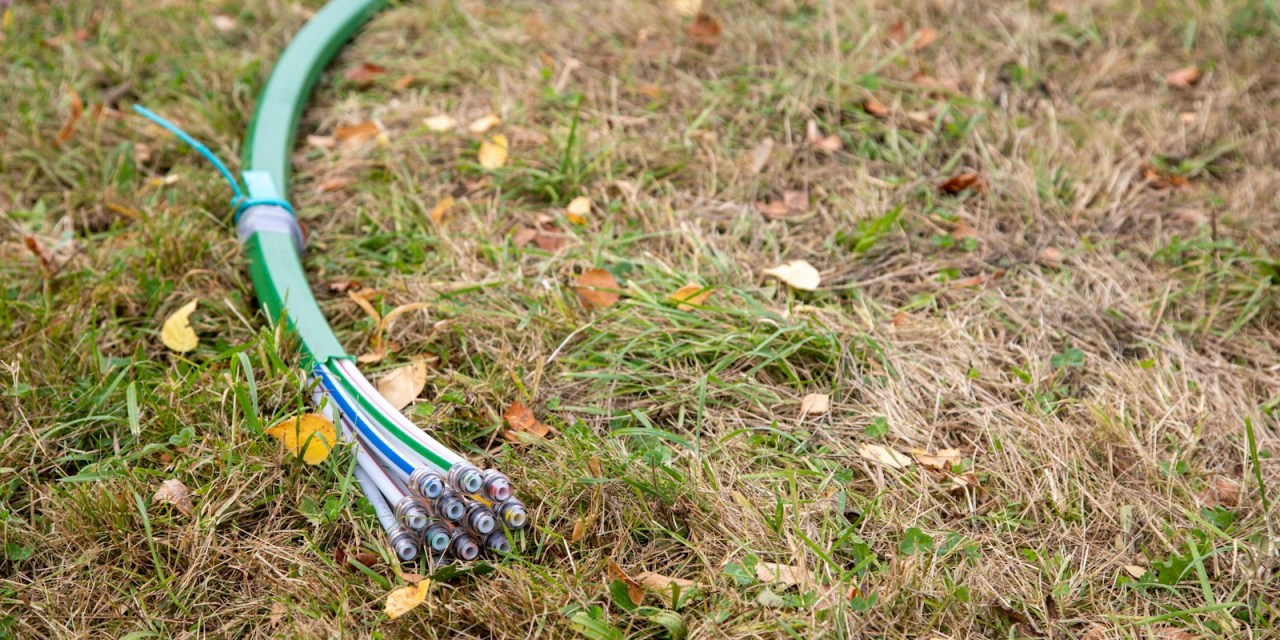
Provide the company with measurements of your networks runs and it will pre-cut fiber to the needed lengths, put connectors on the ends for quick installation, and test everything multiple times before it leaves the factory floor. Signal loss from factory installed and tested connectors is around 0.15 dB per connection, well within the 30 dB range for a PON connection, according to Corning.

Corning asserts that customers will be able to deploy fiber up to five times faster and save $25 or more per home passed in cost reduction, with your potential cost savings depending on geography, whether you’re deploying aerial or underground, and other factors. The biggest upfront investment is more accuracy, which translates to field survey time to measure the lengths of fiber along each network segment prior to putting in an order.
The pre-cut service provides another benefit as well. In case of a cable breakage or cut due to an accident or natural disaster, Corning can build replacement cable from the initial design data if needed.
Processes
Habits are hard to break, and culture is hard to change, especially when both are not guided by documented procedures and held to account through specific measurements. At a Fiber Connect 2025 session in Nashville, Stephen Milner, CEO at Planters Telephone Cooperative, discussed sitting down with a vendor partner and conducting an analysis of their existing processes to find changes that could deliver faster installation rates.
One of the first things that came to light was that Planters had been operating as a cost-based operating company and was moving to a revenue-generating business model. This shift meant Planters needed to rethink their assumptions throughout the organization, challenging management and teams to examine their existing practices and how others in the industry did things differently.
For example, based on past practices, Planters would do a truck roll to test a fiber circuit to the home before sending out an installation crew to turn up the household. Looking at data, they found that problems arose in only 1 of 50 households, meaning the test-before-installation step essentially added an unnecessary truck roll, consuming time and money.

In another instance, Planter’s dedicated splicing crew wanted to be involved in every household turnup, instead of leaving the work to installation crew technicians. By letting the installation crew technicians deal with it, the splicer crew could focus on larger jobs involving 96 or 144 strand cables to bring up new service areas rather than being tied up to one household at a time.
Speeding progress through small changes
Planters and other service providers sharing their experiences at the Fiber Connect session found that by implementing small incremental changes, along with other measures, field crew averages improved at some organizations from one or two per day to three to four per day, essentially doubling the amount of work that could be accomplished with the same resources.
As the pace of fiber deployments increase, I urge everyone in the fiber broadband ecosystem to take inventory and evaluate the way they are doing things today and examine how they can improve their processes to reduce time and improve the speed of delivery. It’s an investment that will pay both figurative and literal dividends in the months and years to come.
To get content like this delivered to your inbox, subscribe to the Broadband Communities newsletter.
Learn more about Broadband Communities Summit 2026 in Houston.