

Contributed Article
Contamination in blown fiber optic systems can cause signal loss, latency, or even complete network failure. Here’s how it can be prevented.
By: Rick Hoffman, Commercial Sales Manager, Sticklers Fiber Group, MicroCare, LLC
The adoption of blown fiber optic systems has transformed broadband connectivity. This is especially true in rapidly expanding sectors like telecommunications, healthcare, and transport. Blown fiber involves installing fiber optic cables into microducts—small, flexible plastic tubes. These tubes encase and safeguard the fiber cables within confined spaces, such as conduits or ductwork. The microducts provide robust protection against environmental stressors, mechanical damage, moisture, and physical compression. The installation uses compressed air, making it faster and more flexible.
However, despite these benefits, one often overlooked but crucial aspect of keeping the reliability and performance of such systems is cleaning the fiber optic connections. Contamination from dust, dirt, oils, and other particles on connectors can cause signal loss, latency, or even complete network failure. This is especially problematic in blown fiber installations, where static electricity and moisture can increase the risk of contamination. Effective connector cleaning, therefore, becomes a vital step in ensuring that networks continue to deliver high-speed, reliable broadband performance.
The growing demand for fiber-optic connectivity
The surge in demand for high-speed internet, driven by advancements like 5G and the internet of things (IoT), has placed unprecedented pressure on broadband infrastructure. Blown fiber systems have appeared as a preferred solution, enabling faster and more efficient deployment compared to traditional cabling methods.
These systems allow for quicker network expansions, with the flexibility to easily add capacity as demand grows. This is particularly important in areas where broadband connectivity is rapidly being rolled out to meet the needs of underserved regions. According to market projections, the global cable blowing equipment sector is set to grow from $108 million in 2023 to $136 million by 2028, growing at a GAGR rate of 4.7%1, reflecting the critical role of this technology in meeting connectivity demands.
While these systems offer efficiency and scalability, their performance hinges on meticulous maintenance. Contaminated connections can compromise even the most advanced networks, making thorough cleaning an essential practice for technicians working in blown fiber environments.
Understanding the challenges of contamination
Fiber optic splices and end faces are particularly vulnerable to contamination during installation and use. Splices, where two fibers are joined, can collect dirt and debris, leading to signal degradation or loss. Similarly, end faces are prone to oils, dust, and fingerprint contamination during handling or installation.
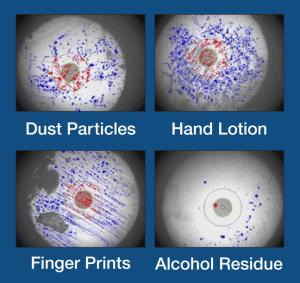
Contamination from dust, dirt, oils, and other particles on connectors can cause signal loss, latency, or even complete network failure.
Static electricity poses another challenge in blown fiber installations. The compressed air used in the process can generate static charges, which attract airborne particles to sensitive surfaces. This effect is amplified in low-humidity environments, where static build-up is more pronounced. Moisture, too, can be introduced during the fiber-blowing process, further complicating the task of supporting cleanliness.
Effective cleaning practices for blown-fiber systems
Maintaining the cleanliness of fiber optic connections requires a systematic and informed approach. The process begins with a comprehensive installation assessment, thoroughly identifying areas that need attention and gauging the extent of contamination. Technicians must be equipped with purpose-built tools specifically engineered for fiber optics.
Essential cleaning tools
The toolkit for fiber optic cleaning should include:
- Lint-free wipes
- Optical-grade, fast-drying, static-dissipative cleaning fluid
- Single-use connector cleaning tools like cleaning sticks and click-to-clean tools
- Fiber-optic inspection scope
When cleaning fiber optic end faces, the “inspect, clean, inspect” method stands as the industry standard. This technique emphasizes the critical importance of visually inspecting the connection before and after cleaning to ensure that contaminants have been effectively removed.
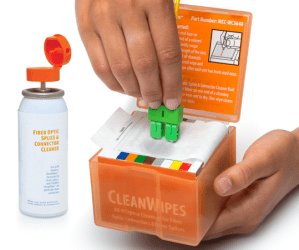
Wet-to-dry cleaning removes contaminants while minimizing static charge build-up.
Advanced cleaning techniques
Wet-to-dry cleaning method
The wet-to-dry cleaning method is a highly effective approach for fiber optic end face maintenance. Technicians should lightly dampen a high-quality, lint-free wipe with specialized static-dissipative cleaning fluid. When cleaning connector end faces, they gently glide the fiber across the wipe, starting from the dampened area and moving to the dry part. This technique ensures contaminants are removed while minimizing static charge build-up. It is important to avoid oversaturating the wipe, as excess fluid can increase evaporation time and potentially attract airborne contaminants.
This method is particularly significant in blown fiber installations, where static electricity can worsen contamination. By neutralizing static charges and employing precise wiping techniques, technicians can ensure a thorough, lasting clean for delicate fiber optic connections.
Cleaning sticks
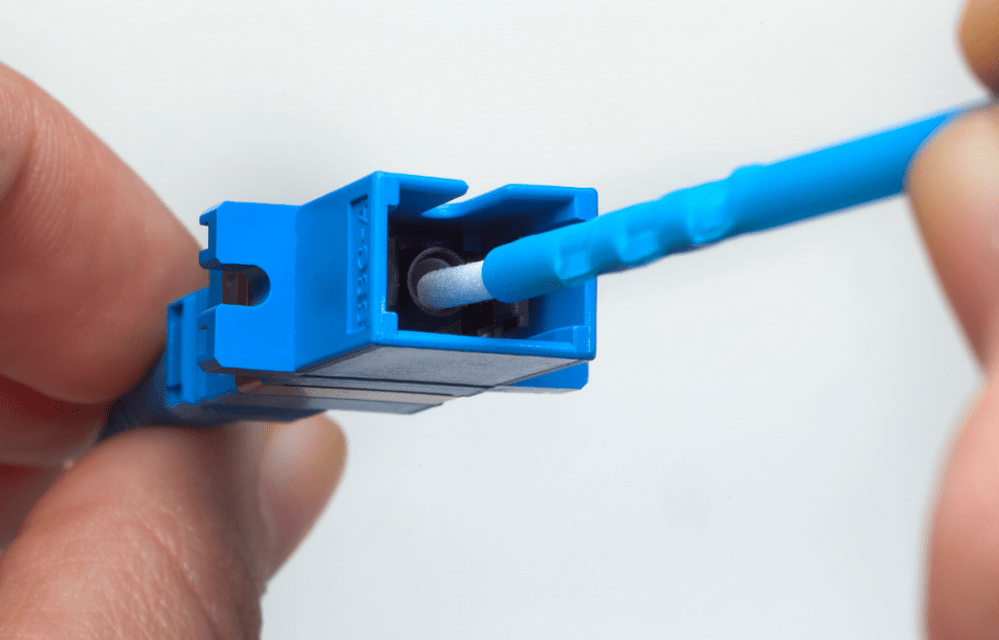
Cleaning sticks with polymer-tipped ends are essential for cleaning hard-to-reach connectors in alignment sleeves. The process involves lightly moistening the stick with cleaning fluid — without oversaturation — and inserting it into the connector. Technicians rotate the stick approximately six times in one direction. This gentle motion ensures effective cleaning without causing damage or cross-contamination. A new stick should be used for each end face to keep cleanliness and prevent cross-contamination between connectors.
Click-to-clean tools
Click-to-clean tools are ideal for quickly addressing lightly soiled connections. To use these tools, first, lightly dampen a lint-free wipe with cleaning fluid. Then, gently wipe the tool’s tip across the dampened area. Next, insert the tool into the connector and click to activate the cleaning process. This method is efficient for minor contamination and technicians should avoid spraying fluids directly onto the tool or end face, as this could cause pooling or contamination.
Cleaning fluid considerations
Choosing the right cleaning fluid is crucial for supporting fiber optic performance. Fluids like isopropyl alcohol (IPA) and water should be avoided due to their slow drying times and potential to leave residue. Instead, use optical-grade cleaning fluids specifically engineered for fiber optic cleaning. These fluids should be non-flammable, non-hazardous, and fast drying, with high purity to prevent residue build-up. To ensure the cleaning fluid stays uncontaminated, it should be dispensed from hermetically sealed containers.
The broader impact
The rapid expansion of broadband networks has underscored the importance of supporting fiber optic cleanliness. By adopting best practices and using advanced cleaning tools, technicians ensure the best performance of blown fiber systems. Clean connections translate directly to faster speeds, greater reliability, and an improved experience for end users.
From first installation to ongoing maintenance, cleaning is critical to effective fiber optic management. Maintaining clean fiber connections will be essential to providing reliable and efficient connectivity as broadband technologies evolve.
Rick Hoffman is Commercial Sales Manager for the Sticklers™ Fiber Group, a division of MicroCare™. He has more than twenty years of fiber optic network training and sales experience. For more information, visit www.microcare.com.
Join the conversation about connectivity in North America. Click here to learn more about Broadband Communities Summit 2025.