

Contributed Article
The importance of fiber for all parts of the nation’s economy – not just high-tech industry and white-collar jobs – was brought home by voices like Land O’Lakes Chief Technology Officer Teddy Bekele at Fiber Connect 2024.
By: Nadir Noon, Fiber Broadband Association

Nadir Noon, Fiber Broadband Association
With tens of billions of dollars in federal monies spent on broadband over the past five years, another $42.5 billion in Broadband Equity, Access, and Deployment (BEAD) money reaching the starting line, and the continued investment by carriers and private equity, the fiber industry is entering an unprecedented era as the nation invests in next-generation telecommunications infrastructure designed to last for decades.
Fiber Connect 2024, held from July 28-31 in Nashville, showcased a wide array of people and companies focused on accelerating the future of fiber broadband. The conference brought together industry leaders, experts, and innovators to discuss advancements, challenges, and the broader impacts of fiber connectivity.
The importance of fiber for all parts of the nation’s economy – not just high-tech industry and white-collar jobs – was brought home by Land O’Lakes Chief Technology Officer Teddy Bekele.
Land O’Lakes is a $19 billion cooperative operating in all fifty states and 60 other locations around the world. Best known for its butter, the organization’s divisions touch everything from the seeds and fertilizers that go into growing crops to providing data analytics to farmers, helping them get better yields while reducing carbon emissions.
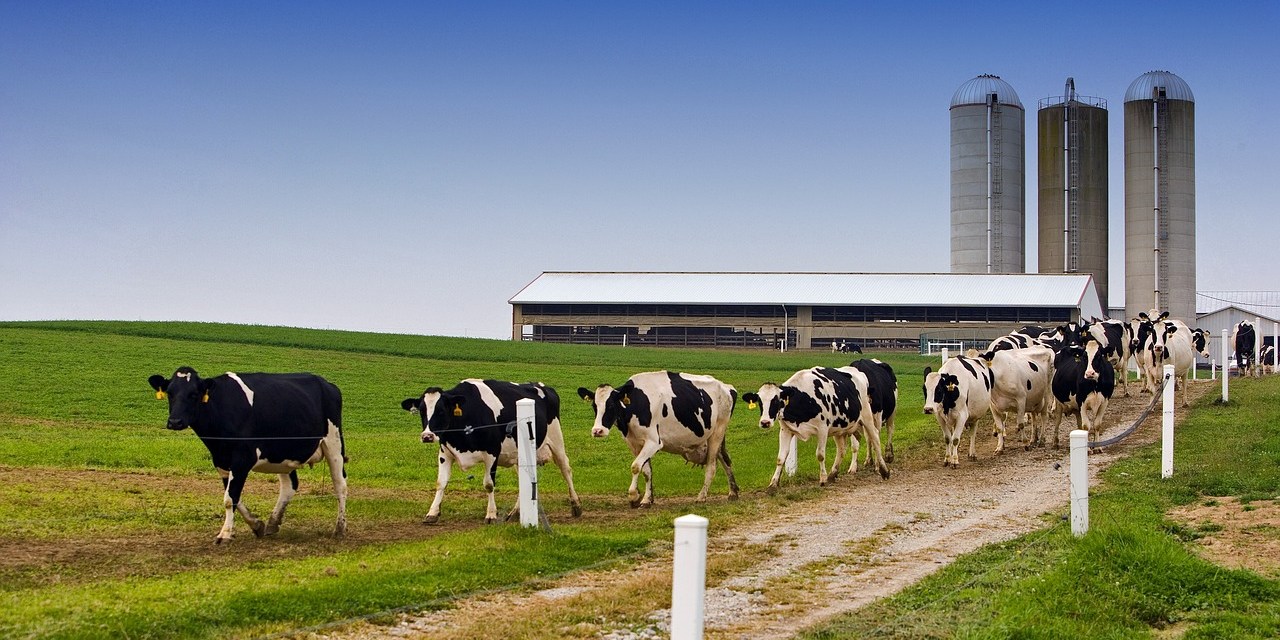
It is a true “field to table” business, with the grain raised by its members going to dairies to feed cows, which produce milk that goes into its butter and cheese products, which can be easily found in the grocery store.
Farming has always been a data-driven business, with farmers wanting to optimize their use of resources to get the best return. Fiber broadband enables farmers to get real-time information on the health of their crops and how to improve them by leveraging Land O’Lakes’ best practice-solutions. The solutions are created and refined through data it gathered in test facilities, from sensors in the fields, and through satellite data.
“The difference between a farmer getting 170 bushels per acre and 185 bushels per acre, that 15 bushels per acre difference is the difference between being in the red and losing the farm and being in the black and having that operation available for generations to come,” Bekele told the audience.
Land O’Lakes wants all the 400,000 producers and 10,000 communities it works with to have fiber broadband, so they can be more productive and gain access to new opportunities, such as being paid a premium for sustainably grown products and making money through carbon sequestration practices that translate into paid carbon credits.
Bekele described a future where food is medicine, and people will have optimized diets from their doctors to improve their health. But to do that, there needs to be more data flowing throughout the process of raising crops and making sure they meet the criteria necessary for incorporation into tailored diets.
While Land O’Lakes is using fiber to keep family farmers viable, Tribal nations are using it to preserve their culture and heritage.
Robert Griffin, Tribal Broadband Leader for the Choctaw Nation of Oklahoma, described how the government deployed fiber to connect the reservation’s 17 community centers, moving them out of the modem era, into the modern age, and enabling them to deploy Wi-Fi. But that connectivity needs to be extended further.
“We’re about the same size as Massachusetts, but only 3% of the population,” said Griffin. “We have 400 locations across the reservation, about an eighth of those generating revenue. More importantly, more than 35 percent of our coverage map shows less than 25/3 connectivity. We know what that means, right? Some of these folks have no internet connection whatsoever.”
The nation is working towards a goal of getting 80 percent high-speed broadband coverage by the end of 2027, much of it with fiber in the home and with fiber playing a cornerstone role supporting a 2.5 GHz wireless network to reach more distant locations, but there are significant challenges in geography and geology.
Existing fiber supports the Emerging Aviation Technology Center (EATC), a one-of-a-kind aviation test facility with over 44,600 acres of remote land to test emerging manned and unmanned drones and aircraft, will support a new maker space being built at EATC. It is also being used to document and preserve the Choctaw language, which was used by tribal members in the U.S. military in World War I and II to secure battlefield communications.
Today the tribe is working to keep the language alive, using fiber to build tools and classes to share the knowledge older generations have with the current ones.
“We have a reference dictionary available online, we teach dozens of classes every week,” said Griffin. “We deploy our classes to universities, childcare locations. If you think about an elder going back to their home and trying to connect to the internet with a dial up connection, it just doesn’t work because everything we do nowadays is via video.”
Developing the workforce of today and tomorrow
Several keynote speakers and panel discussions explored how service providers and network construction firms are building their workforces and employees to deal with the challenges of today and tomorrow.
“One thing I’m asked all the time is, ‘Why is UTOPIA successful?’,” said Kim McKinley, CMO, UTOPIA Fiber. “And I say every single time, ‘It’s about the people who work inside UTOPIA.’”
The open access network company was founded in Utah in 2004 and has grown to around 113 people as it has expanded and built networks that serve as a platform for 18 residential providers, delivering broadband to 50 Utah communities across the state.
UTOPIA had significant growing pains in its early years, fighting for political support and identifying reliable partners and vendors who actually understood the space and were financially viable.
“I always say there was a lot that went wrong, that was out of our control,” said McKinley. “But there’s a lot that we didn’t know. The joke I always said was, ‘If it was done wrong, we probably got it wrong twice.”
Eventually, the company solidified around its current management team and got through its issues, resulting in success and deployment acceleration, with the organization’s trials forging its corporate culture.
“We were seeing this need [for broadband],” said McKinley. “We knew as internal employees we were representing the cities [of Utah] and we had to succeed because we knew what was on the line. I remember when I started at UTOPIA in December 2010, someone said, ‘If we don’t succeed, you won’t have a job.’ That’s motivation for success.”
From across the country, Eastern Shore of Virginia Broadband Authority Executive Director Robert Bridgham discussed how smaller entities grow. He discussed the attributes they should look for as they add employees.
“I want to talk about evolution, the evolution of organizations,” said Bridgham, comparing growth to the evolution of the knife from stone into a sophisticated metal tool.
“Businesses typically start off with some ideas,” said Bridgham. “We all have an idea like, ‘Let’s go put some fiber out there’ because it seems easy and fun. It’s not, obviously. Over time, organizations realize it’s a lot of work and we need bigger teams, we need more money, and we need more resources, so we grow them. One of the things I get concerned about is teams and departments creating specialized units.”
Bridgham noted that while specialization is good for certain tasks, such as network operations and fiber splicing, having everyone be a specialist may not work well because circumstances change, especially at smaller organizations, requiring different skill sets and tasks to be completed. It also creates a silo mentality that can separate different parts of the company that need to work together for success.
“You do want to have cross-knowledge,” said Bridgham. “Bestselling author and public speaker Robert Greene said, ‘The future belongs to those who learn more skills and combine them in creative ways.’ We don’t want people that are single taskers … if you know one thing really well, you’re great. Until that one thing is gone.”
Nadir Noon has been with Fiber Broadband Association since February 2022, serving as Marketing Manager until transitioning into internal operations and events. He has been in the fiber industry for almost nine years and comes from Bloomington, Indiana, where he attended Indiana University for his BS in Telecommunications and MS in Marketing.
To get content like this delivered to your inbox, subscribe to the Broadband Communities newsletter.