
Bandwidth Hawk
A new, assured funding source for the $8 billion a year Universal Service Fund looks likely. Republicans say they don’t like entitlements and taxes. But they do support rural voters. They also love Elon Musk. That means SpaceX could be a competitor in a third of American counties. Find out where, and how to get ready.
By: Steven S. Ross, Broadband Communities
As the Trump Administration unfolds, all of us at Broadband Communities will be looking at consequences – and ways to exploit or mitigate those consequences – for members of what is one of the nation’s most highly regulated and capital-intensive industries: broadband.
There is no question that many issues are on the table, from a smaller Affordable Connectivity Program (ACP) to net neutrality to bulk pricing and review of E-Rate expansion.
One major issue, however, is clearly mature enough to discuss now … and for us to offer a new tool to help competitive deployers react, no matter what happens. That issue is the fate of the Universal Service Fund (USF) and its applicability to low-Earth-orbit (LEO) satellite communication and, of course, SpaceX.
Republican FCC Commissioner Brendan Carr seems headed for the FCC chairmanship. Previously, Carr has opposed expanding any USF programs, including using E-Rate for Wi-Fi hot spots and in school buses to improve student access. But there are many reasons to maintain the USF and to find a new, assured, funding source for it in place of what has become a confiscatory 34.4 percent tax assessed on the dwindling universe of interstate and international phone charges by traditional telecom and VoIP providers.
USF optimism
My two main reasons for USF optimism are obvious: Elon Musk and Sen. Ted Cruz (R-TX).
Back in 2020, the Federal Communications Commission awarded $9.2 billion in broadband subsidies from USF under its Rural Digital Opportunity Fund (RDOF) program.
The top 10 bidders won 72.6 percent of the money and committed to connecting 72.4 percent of the winning premises. The average subsidy was almost identical, within a few dollars of $1,770 per premises served over 10 years.
Different projects build out at different rates, with all premises committed to be served in six years. But, as a rough comparison, it amounted to a pro-forma subsidy of just under $15 a month per premise for 10 years (if all the premises were served on day 1). At the time, I calculated that the actual subsidy per subscriber household collected by deployers would be about $25 a month.
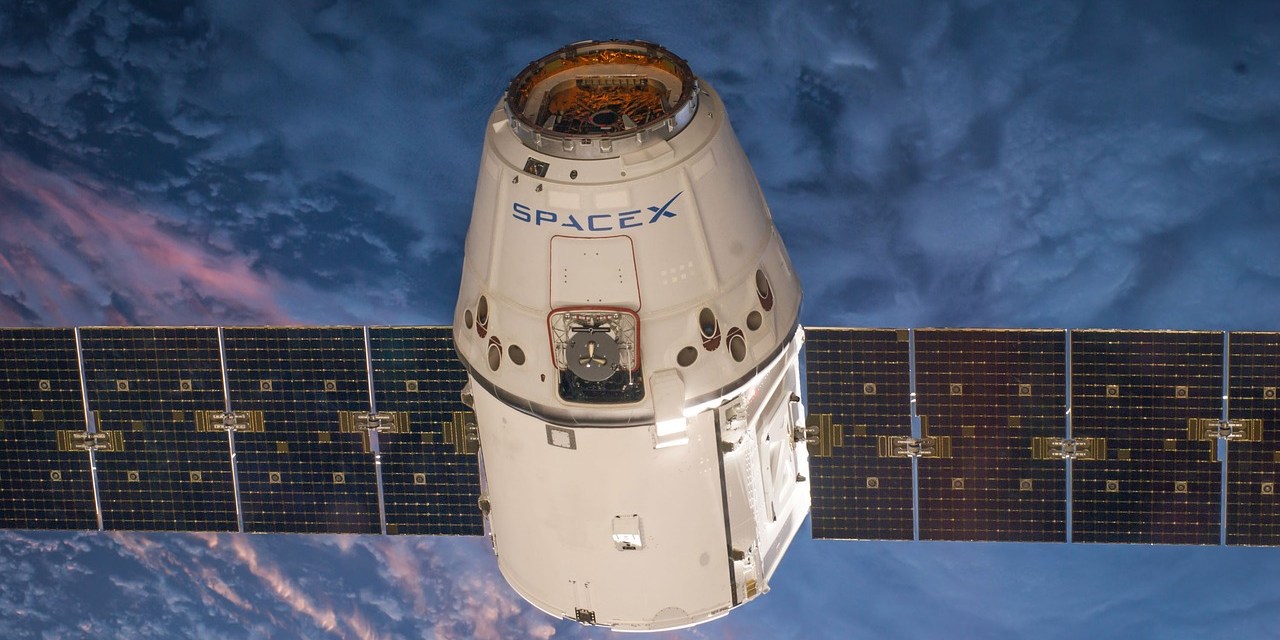
SpaceX ranked fourth in subsidies to be received (almost $886 million over 10 years) and second in premises to be served (642,925). But it was by far and away the only one judged worthy of mention by mainstream media. It won territories in 35 states for an average subsidy of $1,377, or about $11 a month.
RDOF stumbles
The Rural Digital Opportunity Fund (RDOF) competition, held at the height of the COVID pandemic and before passage of the Broadband Equity, Access, and Deployment program (BEAD), promised to be a modest boon to residents and small businesses in many of the nation’s most rural areas. Alas, many award winners gave up their winnings as inflation raised costs, construction labor ran short, broadband activists complained about projects that weren’t all-fiber, and BEAD funding became more of a reality.
SpaceX stayed in … only to be barred after-the-fact in late 2020 because the FCC decided satellite communication was not good enough. But compared to what? In many rural areas (adding up to less than 2 percent of all US households), it had (and still has) no real competitor. It is also clear that even BEAD’s $42.5 billion funding likely won’t be enough to connect everybody.
The original awards, totaling almost $1 billion a year for 10 years, shrank to little more than half that.
A shifting balance of power
With the change in administrations, the balance of power at the FCC shifts to Republicans. They have resisted USF expansion.
SpaceX creator Elon Musk played a large role in helping to get Donald Trump elected. Rural voters also skew Republican and have a powerful champion in Sen. Ted Cruz (R-TX), who has actually done quite a bit of thinking on the issue. What’s more, the product – SpaceX low-Earth-orbit (LEO) satellites – has improved. The satellites themselves are better and there are more of them. If Musk is to get his money, the USF must survive.
Politics aside, LEO-satellite connectivity is a much better competitive and technological fit for rural customer densities than it is for urban or even suburban sites. But some of the largest grants for SpaceX were in urban counties. The largest RDOF project for SpaceX was for 10,732 premises in Cook County Illinois, for instance – Chicago. The largest overall project funding was for $10 million to subsidize service to over 4,000 units in Idaho.

Range of original FCC RDOF grants to SpaceX, late 2020.
My verdict? SpaceX is back in the game, and (again, politics aside) deserves to be.
Sen. Cruz also has some thoughts about revamping the Universal Service Fund, and that issue is likely to be the biggest barrier between Musk and the money.
What it means for other carriers
Thus, fiber and wireless competitors may have to adjust their own deployment and pricing plans. They’ll have to take subsidized and non-subsidized Starlink dishes from SpaceX into account.
The competitiveness SpaceX offers is not merely in the number of dishes Musk won subsidies for. SpaceX customers will talk to their neighbors. They’ll add new users before most deployers can upgrade their own offerings – hence, a decline in likely take rate for fiber and wireless.
To compete, deployers should know where all 1,268 proposed (and originally grant-worthy) SpaceX projects are located. For that, see Table 2, an xlsx Excel spreadsheet sheet listing them all.
I derived the table in 2020 by reformatting the complete 9,000-project list released by the FCC and adding some calculations of my own, arranged alphabetically by state (all 35 states with SpaceX tracts) and then by county within each state.
Cruz has also called for a new, assured funding source for USF, rather than reliance on periodic appropriations. The current USF tax raises about $8 billion a year, so that is a likely target level for any new funding sources.
The money goes in part to subsidize household connectivity and in part for such activities as education (including E-Rate) and remote medicine, along with remote mental health counseling. RDOF has had a checkered past, but the spending targets for it and earlier, similar carrier subsidies alone total roughly $1 billion annually. RDOF itself originally was to disburse $16 billion or more (as much as $1.6 billion a year, over 10 years) but is on course to disburse about $6 billion.
A new approach to USF funding is possible
The FCC, as part of its net neutrality push, could conceivably have added broadband data providers to USF funding sources when it made them “Title II” common carriers. But net neutrality, as usual, is under attack in court. Broadband deployers have suggested that tech companies – especially big ones like Facebook and Google – be taxed to fund USF. That would require legislation to amend the Telecommunications Act of 1996. Cruz has signaled his willingness to consider it.
Sources among Senate Republican staffers say they want to stop taxing pure voice. Similarly, they don’t want to tax pure data (that is, no Title II status for carriers). So, they’ve also been targeting streaming and social media or, as many call them, “tech companies,” but as of mid-November can’t figure out an enduring definition. I note with amusement that X, formerly Twitter, fits most definitions of the “tech companies” Cruz is said to be targeting. Musk is the majority X shareholder.
Additionally, Republicans say they want to cut the federal budget. However, their rural voters want the goodies. One example: Trump, after floating block grants to states and other broadband funding, signed the 2018 U.S. Department of Agriculture (USDA) five-year funding bill on Christmas Eve that year saying offhandedly that there was rural broadband funding in it (the funding paid for multiple rounds of ReConnect). But before that day he had not paid attention to broadband in the massive bill at all.
I’ve never considered federal policymaking as easy. But Donald Trump says it is. So do many Progressive Democrats. This should be fun to watch even if it is borderline hell for many deployers.
Contact the Hawk at steve@bbcmag.com.
Join the conversation about connectivity in North America. Click here to learn more about Broadband Communities Summit 2025.