
Bandwidth Hawk
Early reviews to BEAD’s Benefit of the Bargain round suggest reasonable project costs and the continued domination of fiber.
Fiber continues to dominate, despite a considerable rise in LEO satellite use, and plenty of BEAD funds left over. But is the LEO rise enough to forestall lawsuits threatened in some states by Elon Musk’s Starlink?
Will the states be able to keep the savings – the “Benefit” of the Bargain – to speed deployment and ease financing? And will NTIA ask for more changes in award winners?
By: Steven S. Ross, Broadband Communities
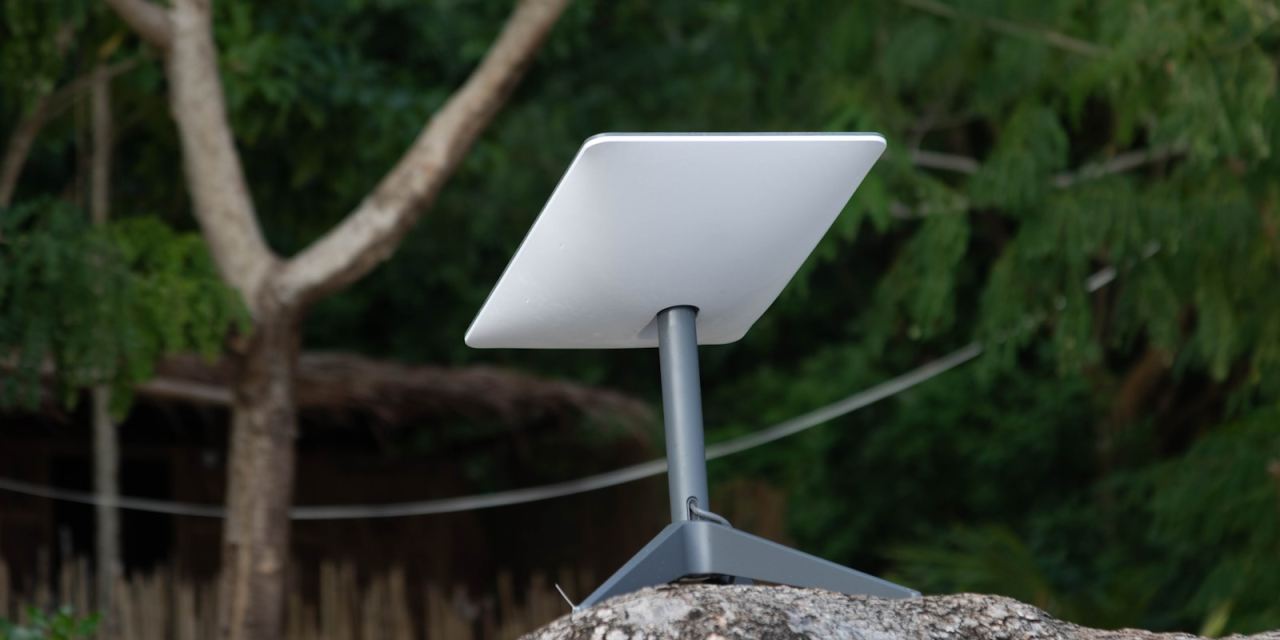
The first batch of state submissions of Broadband Equity, Access, and Deployment (BEAD) grant requests to the National Telecommunications and Information Administration (NTIA) showed a sharp rise in premises that would be served by low-Earth orbit (LEO) satellites.
Fiber deployers lost fewer bids than many had feared. Wireless providers suffered.
Although bringing fast, reliable broadband to sparsely populated areas has often been characterized as a fool’s errand, the average cost per premise so far is about $5000 (Table 1), suggesting a roughly $7,000-per-premise cost for fiber.
That is indeed double or triple the cost of fiber deployments in urban and suburban neighborhoods. It is also slightly higher than the U.S. Department of Agriculture’s four Reconnect rounds. But it is only a quarter the cost projections made during the Obama administration—and today’s broadband is much faster.
Satellite networks, mainly Starlink but also the barely-there Jeff Bezos Kuiper project, picked up 21 percent of the BEAD premises so far – a figure at the outer edge of what I’ve felt is feasible or even wise. But the sample itself is imperfect at this point. Although it covers about a quarter of the $42.5 billion appropriated for BEAD, LEO preference was heavily skewed in Colorado (about half of all premises awarded) and Montana (65%), a vast state with just a half-million household premises – many of them vacation homes used only part-time.
Almost 16 percent of Maine premises are slated to be served by LEO. I have not fully analyzed the deployment map, but Maine has many part-year island residential premises, somewhat balanced by many premises with limited, mountain-bound horizons.
“Cable” wins, with hybrid fiber-coax totaling about 20,000 premises served, out of over 900,000 in the sample.
Investor concerns
Just a few weeks ago, bank loan officers and equity investors were grumbling about the “Benefit of the Bargain” round and were worried that the grant process’s crude and sudden ad hoc modifications would spawn lawsuits and discourage broadband investment.
As I called and emailed around in the last few days of August, however, fears seem to have receded. Part of that is no doubt due to the poor showing of fixed wireless deployers. Wireless won about 85,000 customers, just 9 percent of the early sample.
There was still concern about LEO being an early mover in many rural areas, forcing wireless companies and even fiber deployers to spend marketing funds to claw back customers. Concern has grown recently as Starlink has selectively cut some up-front costs, raised continuing costs (especially for part-year users) and raised prices in some areas, especially densely populated ones, where widespread LEO service is difficult or impossible due to spectrum constraints and the number of satellites in orbit.
There was also concern about the uncertainty of LEO satellite launch plans as Chinese competitors loom as a threat in the race for customers outside the US. They will skew worldwide demand and make Starlink and Kuiper customers foot more of the overhead. This affects the key weakness of LEO – low first-cost for ground stations compared to a wireline deployment, but high monthly subscription costs.
Sources at two equity firms speculated on something else – that SpaceX could be distracted by Chinese investors owning its stock. Such ownership is often considered illegal (for security reasons; SpaceX is a defense contractor) and it is certainly awkward politically. It also raises risk for Elon Musk if he decided to actually act on his threats of lawsuits in multiple states, claiming his share of BEAD funds should be even greater than 21 percent.
Although it is clear that SpaceX has not sought such investments and has, in fact, tried to block them, Chinese investments and shareholders would likely be subject to embarrassing court discovery processes, even putting $6 billion in military and NASA contracts in jeopardy.
As I noted last month, using some of the Benefit of the Bargain money – almost $5 billion in just these states alone – to guarantee loans to deployers (and maybe investments in them as well, although that is a stretch) could lower borrowing cost and make up, in part, for the extra year of delay caused by inserting the “Benefit of the Bargain” process into BEAD at the last minute. It is still a good idea, but not as critical as seemed likely just a few weeks ago.
Some state broadband administrators expect to use the uncommitted funds to serve community facilities and even schools and medical centers. Some in the Administration want the money to simply come back to the federal treasury… metaphorically, of course, because it doesn’t physically exist and would otherwise have to be borrowed.
Progress toward the long-awaited spectrum auction is also unclear to many state officials. The auction, which is supposed to raise $88 billion, would likely drive more deployments to “unlicensed” spectrum and raise costs for future cellular expansion. It also would have an uneven effect on fiber competitive economics – fiber may gain in the East but may lose in the West. Meanwhile, LEO becomes faster and more reliable but also more expensive to operate.
Coming in September: Can BEAD deployments – with as little as 100 Mbps downloads and 20 Mbps uploads — withstand the bandwidth and latency needs of the decade ahead?
Get content like this delivered to your inbox. Subscribe to the Broadband Communities newsletter.