
Contributed Article
The NMHC’s ‘Advocacy Day’ was a powerful reminder of the role we all play in shaping the industry’s future.
By: Valerie M. Sargent, Broadband Communities
Attending the recent Advocacy Day at NMHC’s 2024 OPTECH Conference & Expo was an unforgettable experience. For the first time, I joined my multifamily colleagues in Washington, D.C., for a day dedicated to advocating for critical issues affecting technology use in the rental housing industry. Organized to engage multifamily professionals in discussions about the policies impacting our work and residents, the NMHC’s ‘Advocacy Day’ was a powerful reminder of the role we all play in shaping the industry’s future.
The atmosphere was one of purpose and anticipation. Our day started with an orientation where National Multifamily Housing Council (NMHC) leaders outlined the primary goals: advocating for the responsible use of artificial intelligence (AI) in multifamily housing, the importance of broadband connectivity for communities, and the need to address cybersecurity and data privacy to protect both resident and property data. These themes weren’t just talking points. They are fundamental aspects of a modern, equitable, and technology-driven approach to property management. As we reviewed these issues, it was evident that the multifamily industry is at a pivotal moment where the tools we use have the power to enhance lives and strengthen communities.
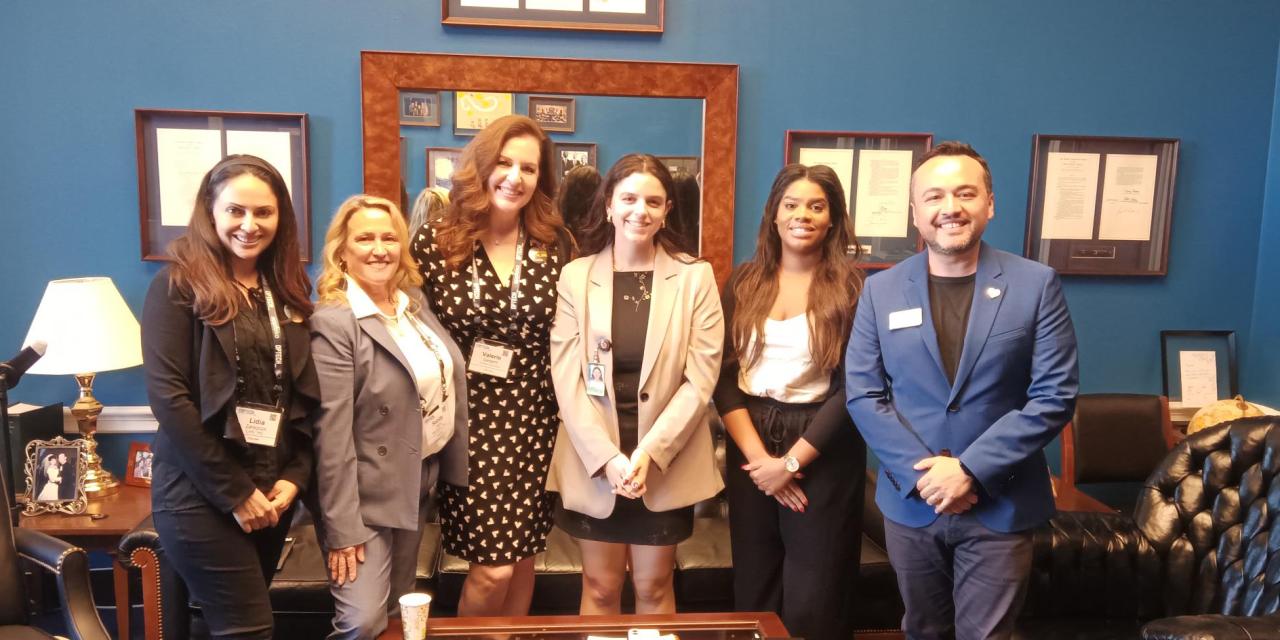
The NNHC’s Advocacy Day saw industry leaders hitting the pavement on Capitol Hill.
Learning the ropes of advocacy
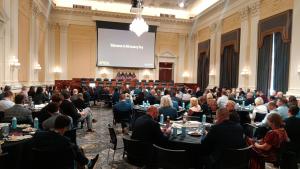
The day’s agenda was a full one, featuring insightful talks from influential leaders who work on the front lines of these issues in Congress and beyond. We had the privilege of hearing from Senator Mark Warner, who has long championed technology’s transformative role in society and who now focuses on ensuring that AI, in particular, is implemented responsibly. Warner’s remarks underscored the bipartisan support for developing AI frameworks that protect consumers while fostering innovation. His perspective was an eye-opener; he cautioned us about foreign entities that do not have America’s best interests in mind, highlighting the importance of cybersecurity as AI continues to develop and play a larger role in the economy.
Hearing Warner’s insights was both informative and inspiring. As chairman of the Senate Select Committee on Intelligence, he encouraged us to remain vigilant against misinformation, reminding us that what we see on the internet isn’t always true. This message hit home in our increasingly digital society, where AI and algorithms shape much of the information we consume. It was a powerful moment for this time in our history that set the tone for our upcoming Capitol Hill visits, emphasizing the need to communicate carefully and truthfully with legislative staff members on behalf of our industry.
Our role in broadband connectivity and cybersecurity
Once on the Hill, we were able to hear from fmr. Majority Leader Steny Hoyer and had a fabulous keynote question and answer session with FCC Commissioner Brendan Carr and Camden’s Linda Willey. Concerns of the overreach of FCC regulations in digital discrimination were discussed, along with the importance of public-private partnerships in infrastructure development. I was encouraged to hear that all of the education that NMHC had done over the past several months has been persuasive to him. I was encouraged to hear him confirm that every time the FCC has looked at the bulk billing issue over the years, they basically come to the same conclusion: it is reducing prices, and there is a competitive market. At this time, they still don’t have the three votes needed to eliminate or change current practices. This all set the stage beautifully for our upcoming staff appointments.
After additional large group sessions, we broke into small groups to meet with the Congressional staffers for our states. I felt a huge responsibility to relay issues thoughtfully about how technology is improving renters’ experiences. I emphasized the importance of broadband connectivity and bulk billing in bridging the digital divide to help the affordable housing market, an area where a lasting impact is needed. Reliable, high-speed internet access has become vital, especially for residents who may depend on connectivity for work, education, and access to essential services. We discussed how bulk broadband services and managed Wi-Fi can help bridge the digital divide, providing residents with affordable internet access that supports property operations as well as resident needs, such as TeleHealth for seniors who may not be physically capable of going to a community room for broadband service.
In the multifamily industry, broadband connectivity goes beyond just providing a service—it creates opportunities for community-building, fosters connectivity, and enables the use of advanced tech tools that make properties more secure and efficient. During our conversations with Congressional staff, it was essential to communicate that broadband access is as fundamental to property infrastructure as electricity or water, particularly as we incorporate more smart tech solutions. They were engaged and very receptive.
The issues of cybersecurity and data privacy were equally prominent, especially as we integrate advanced technologies. Protecting resident data and ensuring privacy are essential in a time when both personal and operational information are vulnerable to breaches. As a group, we highlighted the industry’s commitment to using technology responsibly, focusing on solutions that comply with Fair Housing Act regulations and other consumer protection laws. It’s a delicate balance between leveraging technology to benefit residents and properties and maintaining strict privacy standards to safeguard personal data – a challenge we were eager to communicate to policymakers.
The significance of AI in rental housing
Artificial intelligence, the core theme of this year’s OPTECH, was central to our discussions. With AI now woven into everything from leasing and resident screening to property maintenance and data management, its potential to streamline multifamily operations and improve the resident experience is immense. The stakes are high, and the industry must remain vigilant to ensure AI tools are fair, transparent, and free from bias. At the heart of our advocacy was the message that AI, when applied responsibly, can help address long-standing issues in housing affordability and streamline operational efficiency.
Throughout the day, we emphasized the industry’s commitment to ethical AI use and highlighted existing safeguards to policymakers. Our goal was to ensure that legislative frameworks support innovation in AI while prioritizing resident welfare and adhering to existing regulatory standards. It was rewarding to share real-world examples of how AI is already making a difference, from reducing labor challenges to improving property management efficiency.
A memorable and meaningful experience
While some of us met with Congressional staffers, others toured the Capitol Hill buildings, a rare and humbling experience that reminds us of the value of citizen engagement.
Reflecting on the day, I felt an immense sense of gratitude. Engaging in meaningful discussions about technology, broadband, and cybersecurity – issues that are redefining our work – was inspiring and affirmed my ongoing commitment to being an advocate for positive change in the multifamily industry. Being able to advocate for issues that I’m passionate about, and knowing that our voices were heard, was deeply fulfilling. Advocacy Day was not only about voicing concerns … it was also a learning experience, offering a behind-the-scenes look at how policy decisions are made and a reminder of the impact we can have on our industry’s future. As professionals working within the rental housing space, we each have a unique role in addressing today’s most pressing issues and ensuring our industry evolves responsibly and effectively.
OPTECH 2024 was a remarkable experience, blending technology and advocacy in a way that highlighted the multifamily sector’s commitment to be a force for good.
Leaving D.C., I felt more connected to my colleagues, more informed about the challenges we face, and more motivated than ever to continue to urge everyone to participate in this important work. Advocacy Day was more than just a networking opportunity … it was a chance to make a meaningful impact on the policies shaping our industry. Thank you to NMHC and to the new RETTC (more to come soon on the new Real Estate Technology and Transformation Center!) for an invaluable opportunity to participate in the process. Well done!
To get content like this delivered to your inbox, subscribe to the Broadband Communities newsletter.